Most leaks start small—tiny drips that seem insignificant. But over time, these minor issues turn into major problems. According to industry studies, a single leaking faucet can waste over 3,000 gallons of water per year, while an undetected underground pipe leak can result in millions of gallons lost annually(USGS, 2023).
How Modern Leak Detection Works
Traditional leak detection methods relied on periodic inspections, which often failed to catch leaks early enough. Today, technology-driven solutions provide continuous monitoring and real-time alerts, allowing businesses to take immediate action.
Here are some of the most effective modern methods:
1. Smart Water Meters and Sensors
Smart meters track water usage in real time, identifyingunexpected spikes in consumptionthat could indicate a leak. These systems integrate with software dashboards, giving facility managers full visibility into water usage patterns. Some advanced models can even shut off water automaticallywhen irregular flow is detected.
2. Acoustic Leak Detection
Underground leaks are notoriously difficult to identify, especially in large facilities or municipal water systems. Acoustic leak detection uses sound waves to pinpoint leaks, even in buried pipes. Sensors placed along the pipeline detect unusual frequencies, helping technicians locate leaks with precision.
3. Infrared and Thermal Imaging
Some leaks don’t produce audible signals but can still be detected using infrared cameras. These devices identify temperature variations caused by escaping water, allowing inspectors to locate hidden leaks behind walls, under floors, or within ceilings.
4. AI and Predictive Analytics
Artificial intelligence (AI) is transforming leak detection by analyzing historical data to predict where leaks are likely to occur. AI-powered software can detect patterns of abnormal water usageand alert facility managers before a leak turns into a costly problem.
The ROI of Leak Detection: Is It Worth the Investment?
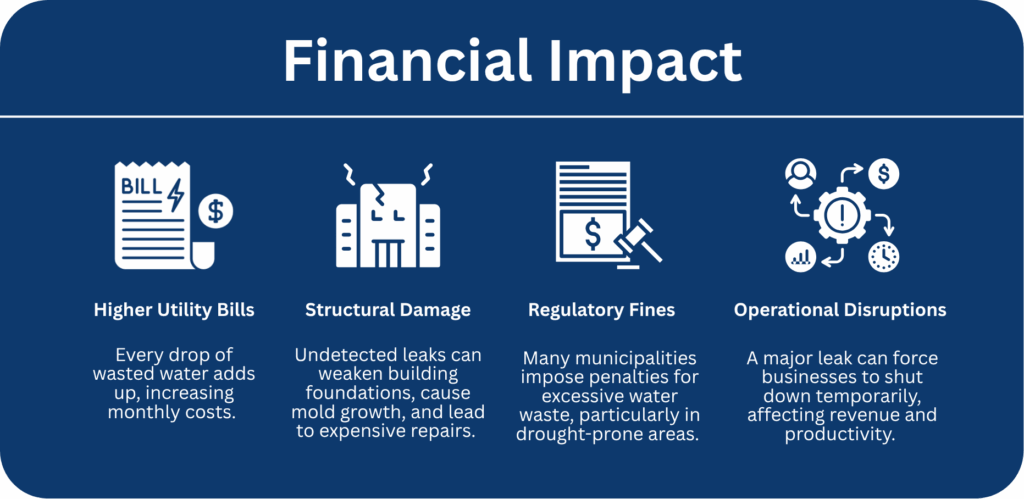
The upfront cost of leak detection technology may seem like an additional expense, but the return on investment (ROI) is significant. Businesses that invest insmart meters, sensors, and AI-driven monitoring often see a payback period of just one to three years.
Key Financial Benefits:
Lower utility bills – Reducing water waste leads to direct savings on monthly bills.
As the world grapples with population growth, climate change, and the wear and tear of aging water systems, managing water infrastructure has become increasingly complex. These issues pose significant challenges for municipalities and utilities, often leading to inefficiencies, increased costs, and operational delays.
Traditional planning methods, which typically rely on historical data and reactive maintenance, struggle to keep up with these demands. This results in higher repair costs, resource mismanagement, and often unpredictable system failures.
Fortunately, there is a solution: Digital Twins.
A digital twin is a dynamic, real-time virtual model of a physical asset—such as a water system—used to simulate, monitor, and optimize operations. By leveraging this cutting-edge technology, utilities can make more informed decisions, reduce waste, and improve efficiency.
The True Cost of Water Waste
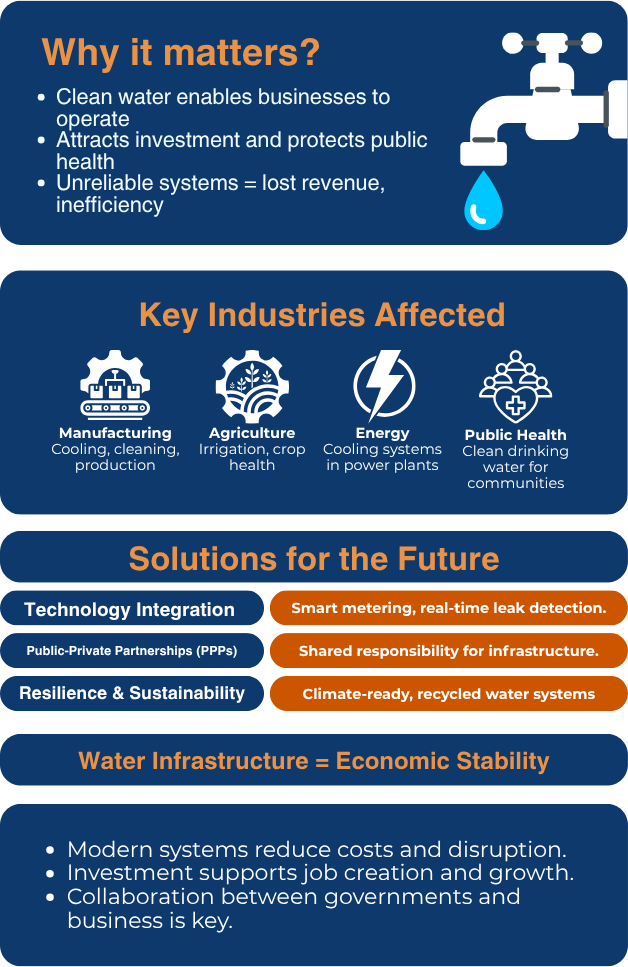
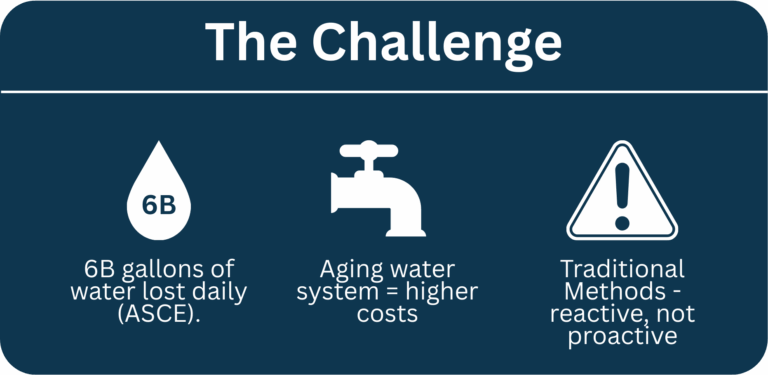
The current state of water infrastructure in the United States is a cause for concern. According to the American Society of Civil Engineers (ASCE), approximately 6 billion gallons of treated water are lost every day due to inefficiencies such as leaks and system failures. This loss has not only environmental consequences but also significant financial impacts.
Key challenges facing water infrastructure include:
Unpredictable System Failures
Lead to costly repairs and downtime.
Leaks
Remain undetected for long periods, resulting in substantial water waste.
Resource Mismanagement
Water is often used inefficiently, driving up costs.
Traditional methods often fail to address these challenges in a proactive manner, leading to reactive maintenance and escalating costs.
How Digital Twins Improve Water Management
Monitor system performance in real time.
Predict failures before they occur, allowing for preventative maintenance.
Optimize water distribution and improve system performance.
Why Digital Twins Are a Game-Changer:
Predictive Maintenance: With real-time data from digital twins, utilities can predict and prevent failures, reducing unplanned downtime and repair costs.
Real-Time Monitoring: Continuous monitoring enables utilities to track water usage, system pressure, and other critical parameters at any given moment.
Increased Efficiency: By optimizing water flow and pinpointing inefficiencies, digital twins help reduce waste and improve the overall operation of water systems.
Who Benefits from Digital Twins?
Municipalities & Utilities
By reducing maintenance costs and improving forecasting, digital twins can help municipalities optimize water usage and increase sustainability.
Industrial Facilities
Digital twins enable efficient water use, ensuring compliance with regulations and reducing operational costs.
Agriculture
Smart irrigation systems powered by digital twins can enhance water conservation efforts, reducing waste and maximizing crop yields.
Ready to Take Control of Your Water Usage?
Contact Phoenix Water Solutions today to schedule a customized water audit and discover how digital twin technology can help you save water, reduce costs, and improve efficiency.